does-privacy-film-work-nights
Does privacy film work nights? Learn why reflective tint changes after dark, what still works, and the right options for Gold Coast homes and offices.
Oct 16, 2026
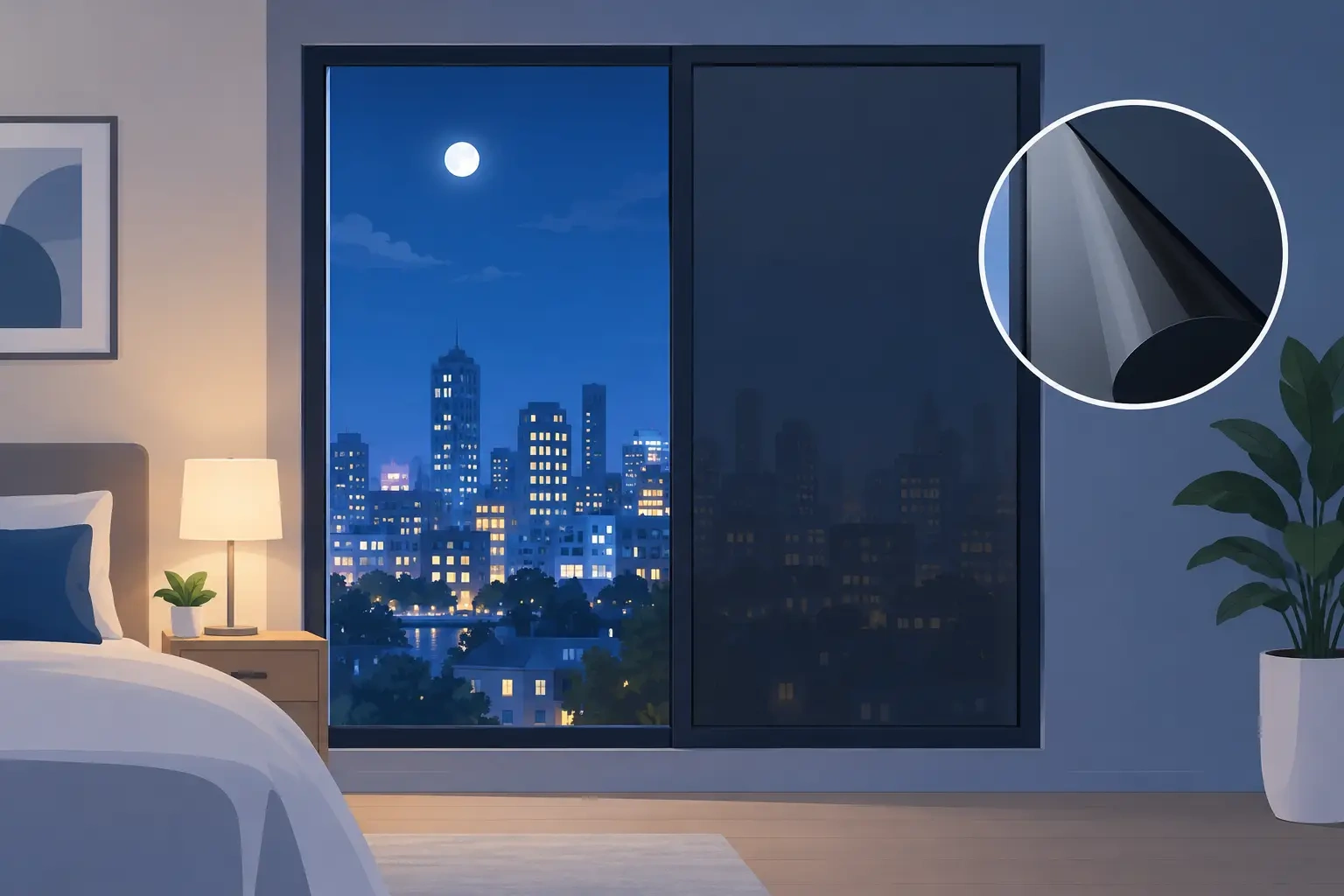
# Does Privacy Film Work Nights? The Honest Answer A lounge room can feel completely private through the day, then become visible from the street as soon as the lights go on. It is the question I hear often from homeowners: does privacy film work nights? The honest answer is that it depends on the film and, more importantly, which side of the glass has more light. Reflective window film provides excellent daytime privacy in the right setting. At night, however, the effect can reverse. If your home or office is brightly lit inside and it is dark outdoors, people outside may be able to see in. That is not a fault in the film. It is simply how reflective glass works. The good news is that there are practical ways to achieve privacy after dark. The right choice depends on whether you want to keep your view, let natural light through, obscure the glass all the time, or combine film with an existing window covering. ## Why reflective privacy film changes at night Most daytime privacy films have a reflective or tinted finish. During daylight hours, the outside of the window is brighter than the room behind it. The film reflects more of that outdoor light, making it difficult for people outside to see into the property while you can still see out. After sunset, the balance changes. Turn on lights inside and the room becomes the brighter side of the glass. The window can then act more like a mirror for the person inside, while someone outside may see into the lit room. Think of it as a two-way mirror with one essential condition: it needs a brighter side and a darker side. There is no standard reflective film that delivers a clear outward view and complete one-way privacy in both directions at all hours without managing the lighting. This is particularly relevant for Gold Coast and Brisbane homes with large street-facing windows, open-plan living areas and poolside glazing. It also affects ground-floor offices, shopfronts and meeting rooms that rely on lighting after business hours. ## Does privacy film work nights for every type of film? No. “Privacy film” describes several different products, and they do not all behave in the same way after dark. ### Reflective and mirrored films Reflective film is the best option where daytime privacy, heat reduction and glare control are the priority. It can make a major difference to a west-facing lounge, a home office with afternoon sun, or commercial glazing exposed to harsh Queensland light. It is not, by itself, a night privacy solution. Once internal lights are stronger than the outside light, visibility into the room increases. Closing curtains, blinds or shutters at night solves that issue while allowing the film to do its daytime job. For many homes, this is the most balanced approach. You retain your outlook during the day, reduce glare on screens, and can cut heat entering through the glass. Depending on the selected film and glass, solar film can reduce heat by up to 79% and glare by up to 93%. ### Frosted film Frosted privacy film works day and night because it obscures the view through the glass rather than relying on reflection. It lets light into the room but prevents clear vision from either side. That makes it a strong choice for [bathroom windows](https://www.tradetint.com.au/blog/frosted-film-for-bathroom-windows), front-door sidelights, ensuite glass, overlooked stairwells, internal office partitions and meeting-room panels. It is also useful where a neighbour’s window looks directly into a bedroom or living area. The trade-off is simple: frosted film also obscures your view out. For a bathroom or an office partition, that is usually exactly what is wanted. For a lounge window overlooking the garden, beach or skyline, it may feel too permanent. ### Decorative and patterned films Decorative film can provide privacy at all hours while adding character to a space. Options such as stripes, bands, dots and custom-cut vinyl are often used on office glass, entry doors and retail fronts. A patterned design can block the most exposed sightlines without covering every centimetre of the glass. This can be a smart middle ground when full frosting feels too enclosed. For example, a horizontal frosted band across the lower section of a street-facing window can reduce direct views into the room while leaving the upper glass clear for daylight and outlook. ### Blackout and opaque films Opaque films offer full visual privacy, day and night. They are generally used where light and views are not needed, such as storage areas, plant rooms, rear-of-house commercial windows or glazing that looks directly onto an unattractive service area. They are effective, but they change the appearance of the window dramatically. I would not usually recommend opaque film for a main living room unless there is a specific design reason for it. ## External lighting can help, but it has limits Some people ask whether installing a bright exterior light will keep reflective film private at night. It can improve the reflective effect if the outside of the glass is brighter than the room inside. In practice, though, it is not always reliable. The external light needs to illuminate the window evenly and be brighter than the internal lighting. A porch light or garden light may create glare, shadows or bright patches rather than a consistent mirrored finish. It may also be unwelcome for neighbours, attract insects, or make the property feel overly exposed. For a commercial site, carefully planned exterior lighting can sometimes support after-hours privacy. For most homes, it is better treated as a secondary measure, not the only solution. ## Choosing the right option room by room The best film is rarely the same throughout the whole property. A bathroom has different requirements from a kitchen, and a boardroom has different needs from a shopfront. For a living room that is overlooked during the day, a solar-control reflective film paired with curtains or blinds at night is often the most useful solution. You get daytime privacy, reduced heat and less glare without losing the view. For a bedroom where privacy matters around the clock, frosted film can work well on a lower pane, side window or narrow strip of glass. If the main window provides a valued outlook, consider leaving it clear and using a blind or curtain for the evening. For front doors, sidelights and entry glazing, frosted or decorative film gives permanent privacy while still allowing natural light into the hallway. It is a popular alternative to replacing clear glass. For offices, frosted bands or fully frosted [meeting-room glass](https://www.tradetint.com.au/blog/meeting-room-glass-privacy-film) can protect conversations and reduce visual distractions. Solar film on external glazing can then handle heat and glare separately. These films can be combined across a workplace so each area performs the job it needs to do. ## Privacy film is not the same as security film A darker or mirrored window may make a room feel more private, but it does not automatically make the glass harder to break. Safety and security films are designed for a different purpose: helping hold [broken glass](https://www.tradetint.com.au/blog/security-film-against-glass-break-ins) together and reducing the risk of dangerous shards or easy entry through shattered glazing. If privacy, solar control and security are all priorities, the glass and the film need to be assessed properly. The right recommendation depends on the existing glass type, the window location, whether the film is installed internally or externally, and what outcome matters most. ## Get the recommendation based on your actual lighting Photos taken in the middle of the day do not tell the whole story. Before selecting a privacy film, look at the window at the times you use the room. Is the room lit at night? Is there a streetlight outside? Do you need to see out, or simply stop people seeing in? Are blinds already fitted? I personally quote and install each Trade Tint project, so I can talk through those practical details before the film goes on the glass. A clear explanation upfront is better than promising “night privacy” from a reflective product that cannot deliver it under bright internal lighting. If you want clear views by day and privacy after dark, film and window coverings usually work best as a team. If you need privacy at every hour with no curtains or blinds, frosted or decorative film is the more dependable answer. The right choice is the one that suits how you actually live or work in the room after the sun goes down.