safety-film-for-windows
Safety film helps hold broken glass together, improving protection at home and work. See where it suits Gold Coast and Brisbane properties every day.
Oct 12, 2026
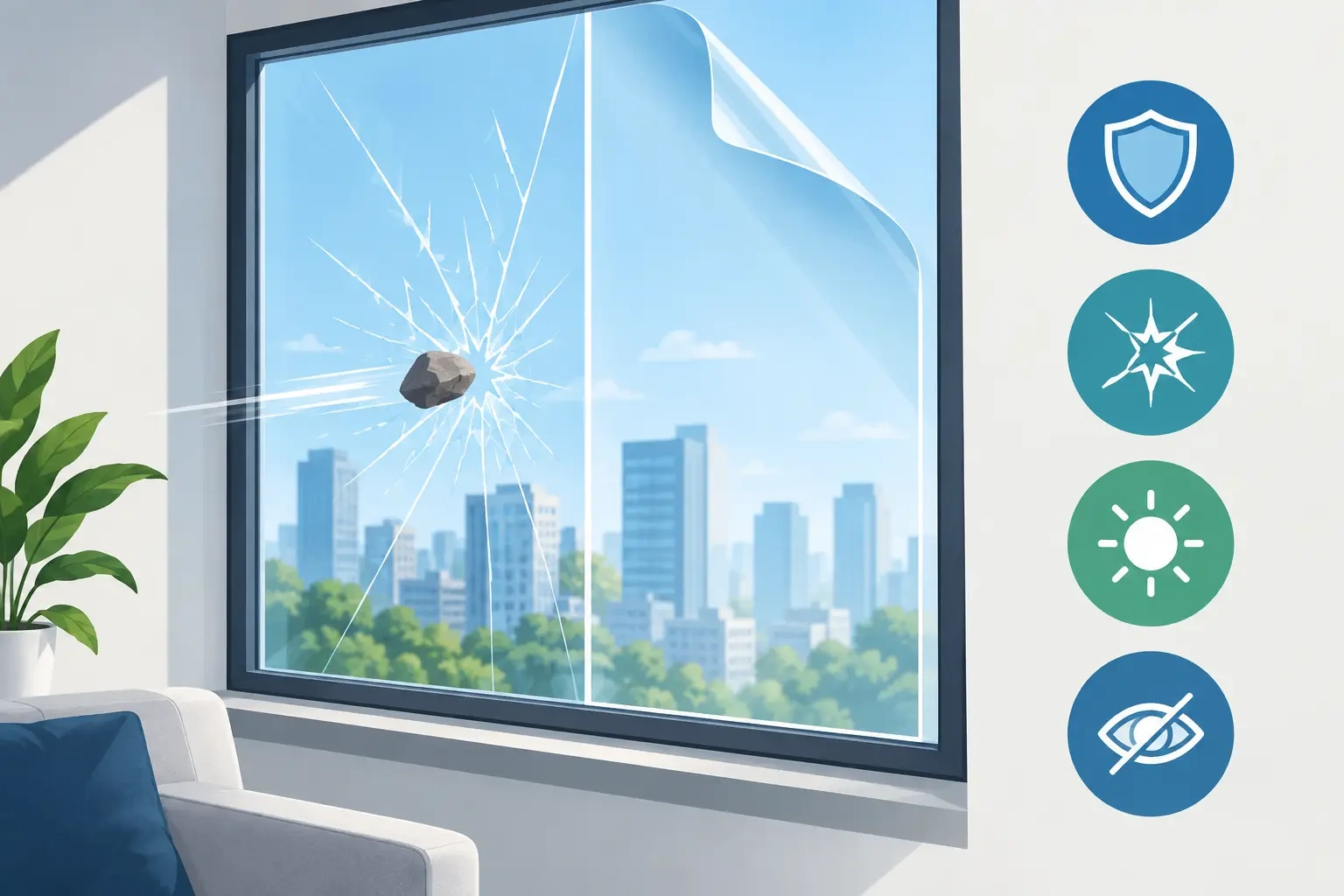
# Safety Film for Windows: What It Actually Does A broken window is rarely just a broken window. Whether it is caused by a stray cricket ball, an attempted break-in, storm debris or an accident at work, loose glass can turn a single damaged pane into a far bigger clean-up and injury risk. Safety film is designed to help hold shattered glass together, reducing the chance of fragments falling into a room or across an entryway. For Gold Coast and Brisbane properties, it is a practical upgrade for existing glazing where replacing every pane with new safety glass may not suit the budget or the building. The right film can add a valuable layer of protection while retaining natural light and the look of the existing window. ## What safety film does when glass breaks Safety and security window film is a clear, heavy-duty polyester film applied to the inside face of glass. It is bonded to the pane with a strong adhesive. If the glass breaks, the film is intended to keep much of the broken glass held together rather than allowing sharp pieces to scatter straight away. That matters in homes with children, glass doors near walkways, low-level windows and large fixed panes. It also matters in offices, shops, schools and public-facing premises, where a damaged window can create a hazard for staff, customers and passers-by. The film will not make glass indestructible. A determined impact can still crack or break the pane, and the force of the impact still needs to go somewhere. What changes is the way the glass behaves after breakage. Instead of immediately dropping in sharp fragments, the fractured pane may remain in place long enough to improve safety, secure the opening temporarily and allow a more controlled repair. That distinction is worth making clear. Safety film is not a substitute for every type of purpose-built security glass, nor is it a promise that a window cannot be breached. It is an added measure that can reduce glass fallout and delay access, depending on the glass, film, fixing method and impact involved. ## Where safety film makes the most sense The best applications are usually the windows people do not think about until something goes wrong. A full-height glass panel beside a front door, for example, can be vulnerable to impact and may leave an exposed opening if broken. Ground-floor office windows and retail shopfronts can benefit from a film that helps keep fractured glass in one piece after an incident. At home, I often recommend looking at low-level glazing, sidelight panels beside doors, internal glass partitions and windows facing a pool area, patio or busy yard. These are areas where people may be close to the glass when an accident occurs. Rental properties can also be suitable, particularly where owners want to improve an existing property without the disruption and cost of replacing otherwise serviceable glazing. In commercial spaces, the priority may be staff safety, damage control or maintaining a secure frontage after a breakage. A glazed office partition can create a significant hazard if it shatters near desks or a corridor. For a shopfront, keeping broken glass together can help limit the immediate mess and make the premises easier to manage until a glazier attends. There is no one-size-fits-all answer. The location of the pane, the age and type of glass, how close people are likely to be, and the intended outcome all matter. A film chosen for accidental breakage may not be the same one selected to improve resistance to [forced entry](https://www.tradetint.com.au/blog/security-film-against-glass-break-ins). ## Safety film and security film are related, but not identical The terms are often used together, but they can describe different priorities. Safety film is primarily about reducing injury from broken glass. Security film is generally selected to improve resistance to forced entry or deliberate impact by helping hold the glass and frame system together for longer. Thicker films can offer greater tear resistance, but thickness alone does not tell the full story. On higher-risk applications, the way the film is attached around the edge of the glass can be critical. A properly specified attachment system may help the filmed glass stay in the frame under more force than film applied only to the glass surface. This is where a quick quote based only on square metres can miss the point. The window needs to be assessed as a system: the glass, frame, bead, surrounding opening and likely risk. A large shopfront in an aluminium frame has different needs from a small bathroom window or a residential sliding door. ## Can film bring existing glass up to standard? This is the question property owners should ask before assuming any film will solve a compliance issue. In some situations, correctly specified and installed safety film can be used as part of a recognised glazing safety solution for existing glass. In others, glass replacement is the more suitable or required option. The answer depends on the application and the relevant Australian Standards, as well as the existing glazing and building requirements. Bathrooms, doors, stairwells, pool areas, commercial fit-outs and low-level glazing can all involve specific safety considerations. If a pane is already damaged, poorly fitted or unsuitable for film, applying film is not the answer. I do not treat safety film as a blanket fix. Before recommending it, I look at where the glass is, what type of glass is installed and what you are trying to achieve. If replacement is the safer option, that should be said plainly. A transparent recommendation is more useful than fitting a product that does not genuinely suit the job. ## Clear protection, or combined window performance Many people expect safety film to be thick, dark and obvious. It does not have to be. Clear safety films are available where the aim is to retain the existing appearance and daylight. This works well for entry glass, display windows, internal partitions and homes where the view matters. Depending on the product selected, it may also be possible to combine protection with solar control, privacy or a decorative finish. A west-facing office window, for instance, may need help with glare and heat as well as improved glass retention. A street-facing [meeting room](https://www.tradetint.com.au/blog/meeting-room-glass-privacy-film) may need privacy without making the room feel closed in. The trade-off is that one film cannot always be the best performer in every category. A clear safety film may be the right choice for maximum visibility, while a tinted solar film may better [reduce heat and glare](https://www.tradetint.com.au/blog/how-to-reduce-window-heat). Where solar control is the priority, quality window films can reduce heat by up to 79% and glare by up to 93%, depending on the glass and film chosen. The right recommendation comes back to the window’s exposure and how the room is used. ## Installation quality matters as much as the film Safety film has to be installed cleanly and accurately for it to perform as intended. The glass must be properly prepared, the film fitted neatly to the pane, and the edges finished correctly. Large commercial panes, patterned glass, old frames and access restrictions all require careful planning. I have personally installed window film since 1993, and I handle the process from assessing the glass and providing the quote through to fitting the film. That means the person discussing the options with you is also accountable for the finished result. It is especially useful on safety work, where the details of the window matter more than a generic product description. After installation, the film needs time to cure. This can vary with weather conditions and film type. Some temporary haze or small water pockets can be part of normal curing, but the finished job should be neat, secure and appropriate for the glazing. ## Start with the risk, not the product If you are considering safety film, begin by identifying what concerns you about the glass. Is it an accident risk around children or staff? A vulnerable side window? A shopfront that needs more protection after hours? Or an older pane that may not meet the expectations you have for that location? Photos, approximate window measurements and a clear description of the area make it easier to provide useful advice and prompt pricing. For a more accurate recommendation, the glass should be inspected in person, particularly where compliance or higher security is part of the decision. A window does not need to be replaced simply because you want more protection. But it does need the right solution. A properly selected safety film can be a sensible way to make existing glazing safer, while keeping the property bright, practical and ready for everyday use.