solar-film-queensland-homes-offices
Solar film can reduce heat, glare and UV in Gold Coast and Brisbane homes and workplaces. See how the right window film improves comfort and privacy daily.
Oct 8, 2026
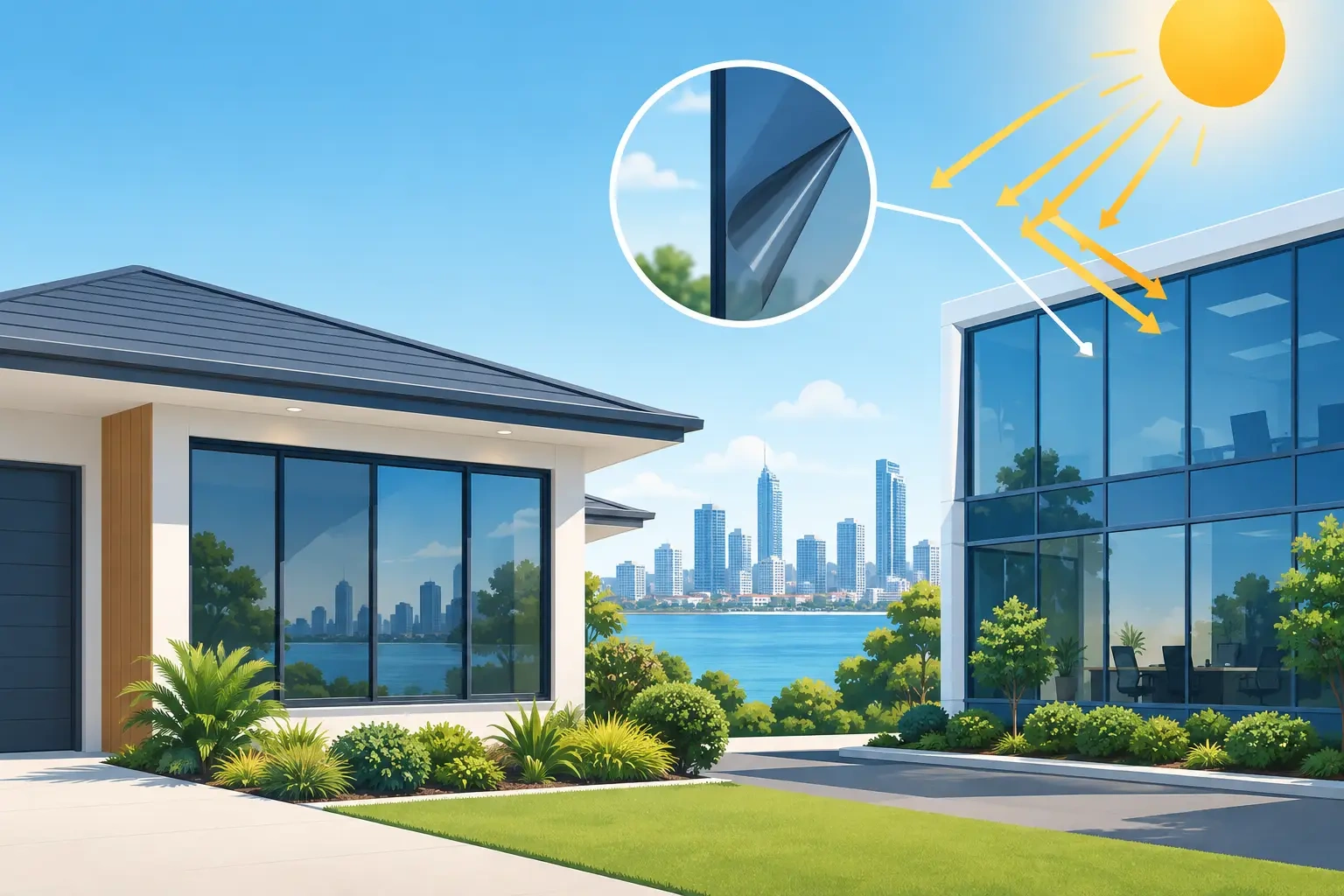
# Solar Film for Queensland Homes and Offices A west-facing lounge that becomes unusable after lunch, computer screens washed out by glare, and timber floors fading near large windows are familiar Queensland problems. Solar film is a practical way to improve the glass you already have, reducing heat, glare and UV exposure without closing off the natural light that makes a room enjoyable. For homes, offices, retail spaces and strata properties across the Gold Coast and Brisbane, the right film can make a noticeable difference to comfort and running costs. The key is choosing a film that suits the glass, the direction it faces and what you want the room to do. Darker is not always better, and the cheapest option is rarely the one that performs best over time. ## What solar film does Solar film is a thin, high-performance window film installed to the inside surface of existing glass. It is designed to manage solar energy before it heats the room, while also filtering the ultraviolet light that contributes to fading. Depending on the selected product and the existing glazing, a quality solar-control film can reject up to 79% of solar heat and reduce glare by up to 93%. That does not mean every window will achieve those figures. A north-facing bathroom with modest morning sun has different demands from a wall of west-facing office glass. Performance depends on the film, glass type, window size, shading and orientation. The practical result is usually straightforward: rooms feel less harsh in direct sun, air conditioning does not have to work as hard, screens are easier to see and furnishings have better protection from UV exposure. Solar film can block up to 99% of UV rays, which is particularly worthwhile around curtains, carpets, artwork, upholstery and retail displays. ## The problem is often glare, not just heat Many property owners first ask about tinting because a room feels hot. Once the film is installed, they often notice glare reduction just as much. Strong reflected light off pools, pale paving, neighbouring roofs or nearby high-rise glass can make living areas and workstations uncomfortable even when the air conditioner is running. In a home, this may mean watching television without drawing the blinds at 2 pm. In an office, it can mean staff can [work at a screen](https://www.tradetint.com.au/blog/how-to-stop-screen-glare-in-your-home-or-office) without constantly shifting desks or closing blinds. For shops, it can protect displays while keeping the frontage visible and welcoming. Blinds and curtains still have their place, especially at night. But once sunlight has passed through clear glass, much of the heat is already inside. Solar film deals with a significant amount of that solar energy at the window, while retaining the view and daylight during the day. ### Daytime privacy has limits Reflective and tinted solar films can also improve [daytime privacy](https://www.tradetint.com.au/daytime-privacy-overlooked-windows). Looking into a brighter room from outside becomes more difficult, which suits street-facing windows, apartments and offices overlooked by neighbouring buildings. At night, the effect reverses if the room inside is brighter than outdoors. Solar film is not a complete privacy solution after dark. If full privacy is required day and night, a frosted film, decorative film, blind or curtain may be a better choice. Being clear about that before installation avoids disappointment later. ## Choosing the right solar film for your windows There is no one-film answer for every property. I assess what is happening at each window before recommending a product. That includes the direction of the glass, how much direct sun it receives, whether the room needs privacy, how much natural light you want to keep and the appearance you prefer from inside and outside. A lightly tinted or spectrally selective film can suit homeowners who want high heat rejection with a more neutral appearance. These films are popular where preserving daylight and clear views matters, such as living rooms with a garden, water or skyline outlook. A darker or more reflective option may be suitable for severe glare, large exposed glazing or a commercial facade where daytime privacy is useful. It can deliver stronger glare control, but it also changes the look of the glass and reduces visible light. That trade-off is worth considering rather than simply choosing the darkest sample. For older homes with clear single-pane glass, solar film can be a cost-effective upgrade compared with replacing windows. For newer properties, the glass itself needs closer attention. Double glazing, toughened glass, laminated panels and certain low-E coatings all need to be assessed for compatibility. Applying the wrong film to the wrong glass can increase thermal stress, which is why a proper inspection is more valuable than an over-the-phone guess. ## Where solar-control window film works best Solar film is often most effective on the windows that cause the daily frustration, rather than every pane in a building. West and north-west facing glass is frequently the priority in south-east Queensland because it catches intense afternoon sun. Large sliding doors, stairwell glazing, home offices and glass-fronted meeting rooms are common problem areas. In homes, I regularly see film used in living spaces, bedrooms, kitchens and media rooms. It can also help [rental properties](https://www.tradetint.com.au/blog/window-tinting-for-rental-homes) feel more comfortable without the cost and disruption of replacing glazing. Landlords benefit from an improvement that protects interiors and makes the property more appealing to tenants. Commercial applications vary widely. An office may need glare reduction around desks and boardrooms. A retail store may want to reduce fading and heat while maintaining a clean shopfront. Medical rooms, gyms, schools and warehouses can each have different requirements for heat, privacy, appearance and safety. The product should follow the purpose of the space, not a generic tinting package. ## What installation should look like A quality film installation starts before the film goes near the glass. Measurements, glass type and access all affect the recommendation and price. Accurate quoting matters, especially on larger commercial jobs or properties with mixed window types. The glass is thoroughly cleaned, the film is precision cut, applied with a mounting solution and carefully finished at the edges. Some moisture or a slightly hazy appearance can be visible while the film cures. In Queensland conditions, this usually settles as the adhesive dries, although thicker films and cooler weather can take longer. I have been installing window film since 1993 and personally handle the quote and installation for Trade Tint projects. That means the person assessing your windows is also accountable for the finished result. It is a simpler process than being passed from a salesperson to a different installer who has not seen the job. After installation, avoid cleaning the glass until the film has had time to cure. Once cured, use a soft cloth or rubber squeegee with mild soapy water. Avoid abrasive pads, harsh chemicals and scraper blades, which can damage the surface or edges of the film. ## When solar film may not be the whole answer Solar film is highly effective, but it is not magic. A poorly insulated roof, unsealed doors or a room with no ventilation can still feel hot. In some cases, external awnings, landscaping, curtains or air-conditioning improvements should work alongside the film. It also cannot create nighttime privacy in a fully lit room, repair damaged glass or replace a safety film where impact resistance is the main concern. If security, shattered-glass retention or compliance is the goal, a dedicated safety and security film may be the more suitable product. The best result comes from identifying the actual issue at each window. Heat, glare, fading and privacy can overlap, but they do not always need the same solution. A measured quote and a look at the glass in person will help match the film to your property, your expectations and your budget. A cooler room is useful, but the real value is being able to use the space comfortably at the time of day you want to use it. Start with the windows causing the biggest frustration, and choose a film that solves that specific problem without sacrificing the light or view you enjoy.