top-ways-to-cool-windows
Top ways to cool windows in Gold Coast and Brisbane homes, from shading and ventilation to professionally installed solar-control window film for comfort.
Oct 19, 2026
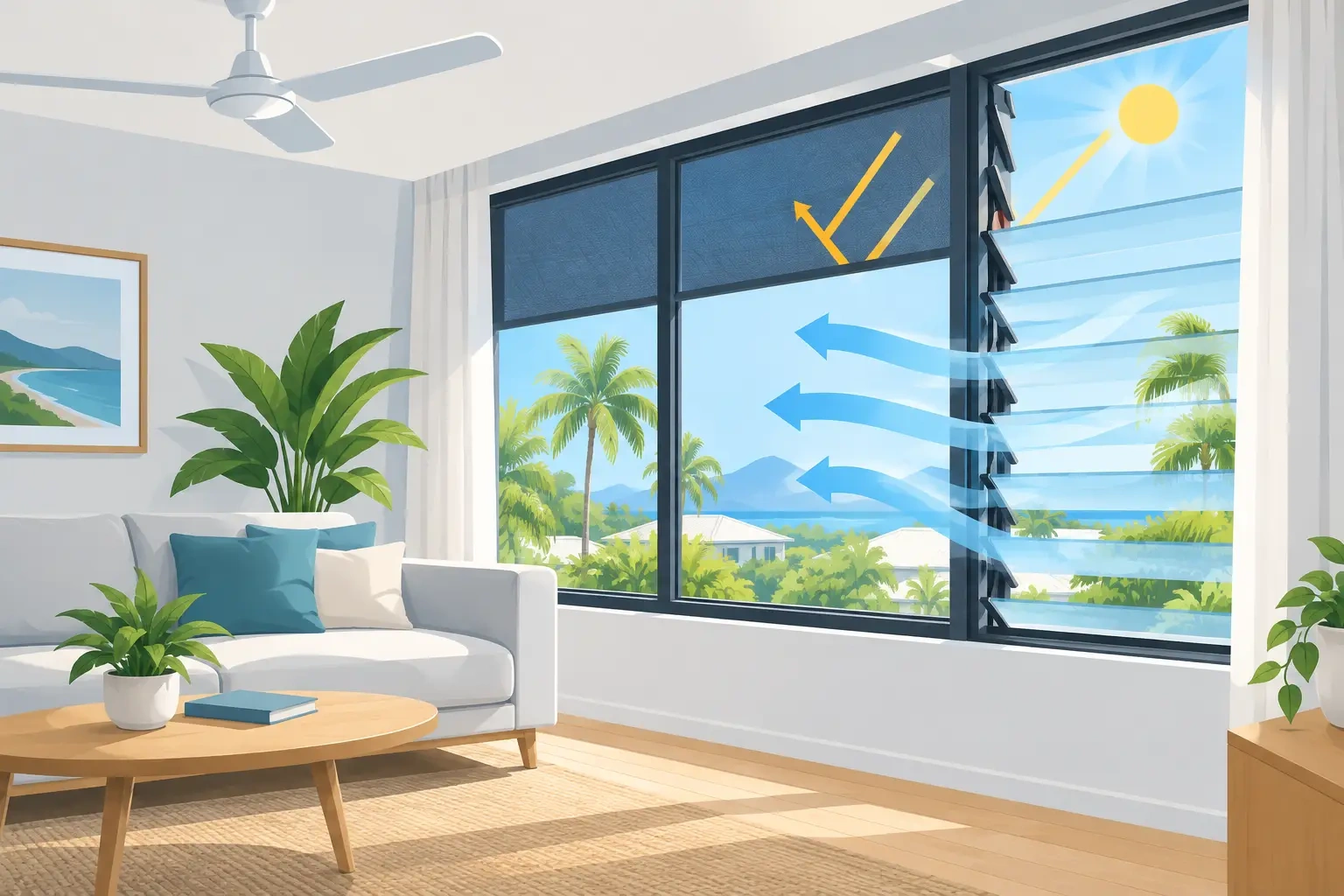
# Top Ways to Cool Windows in Queensland Homes A west-facing living room can feel comfortable at 9 am, then become the hottest room in the house before lunch. On the Gold Coast and in Brisbane, glass is often the reason. The top ways to cool windows are not about making a room dark or shutting it away from the view. They are about stopping solar heat before it builds up inside, while keeping the light, outlook and ventilation that make Queensland homes enjoyable. The right solution depends on the direction of the glass, the size of the windows, whether they are single or double glazed, and how you use the room. A bedroom with early morning sun needs a different approach from a shopfront that gets full western exposure every afternoon. ## Start by identifying which windows are causing the heat Before buying blinds or changing the air-conditioner settings, pay attention to where the heat enters. Stand near each window on a sunny day. If you can feel radiant heat through the glass, or if the floor and furniture beside it become noticeably hot, that window is a priority. West-facing windows are commonly the hardest to manage because the afternoon sun is low and intense. North-facing glass can bring substantial heat through the middle of the day, while east-facing bedrooms may be uncomfortable early in the morning. Large sliding doors, high-set clerestory windows and unshaded shopfront glass can all add a surprising amount of heat load. This check also helps separate window heat from other problems. A hot roof space, poor ceiling insulation or gaps around doors can contribute to an uncomfortable room. But if the room heats up as sunlight hits the glass, treating the window will usually make a noticeable difference. ## Top ways to cool windows without replacing the glass ### Install solar-control window film For many existing homes and commercial buildings, solar-control window film is the most effective option because it works directly on the glass. Quality film helps reject a significant portion of solar energy before it becomes trapped inside the room. Depending on the film selected and the existing glazing, it can [reduce heat](https://www.tradetint.com.au/how-to-reduce-window-heat) by up to 79% and glare by up to 93%. That does not mean every window should receive the darkest film available. Darker films can provide stronger glare and heat control, but they also reduce visible light and can change the appearance from inside and out. In a living area with a good view, a lighter neutral or spectrally selective film may be the better fit. In a media room, office or sun-drenched western bedroom, stronger tint may be worthwhile. Solar film also filters UV exposure, helping protect timber floors, furnishings, artwork and retail displays [from fading](https://www.tradetint.com.au/uv-film-for-fading-furniture). It is a practical upgrade when replacing otherwise sound windows is not on the cards. I have installed window film since 1993, and the best result always comes from matching the film to the glass and the problem being solved. Heat reduction, privacy, glare control and appearance need to be considered together, not treated as separate decisions. ### Use external shading where it suits the building Shade outside the glass is highly effective because it blocks direct sun before it reaches the window. A well-designed awning, pergola, exterior blind or fixed louvre system can make a real difference, particularly on north-facing windows where the sun angle is more predictable. The trade-off is that external shading can be more involved and more expensive than film. It may need approval in a strata property, structural fixing points, enough clearance from walkways, and ongoing cleaning or maintenance. It can also affect the façade of a commercial property. For west-facing windows, vertical screens and external blinds often work better than a shallow awning because the late-day sun comes in at a low angle. Where practical, combining exterior shading with window film gives the strongest overall protection. ### Fit internal blinds, curtains or shutters Internal coverings are valuable for comfort, privacy and controlling light, especially at night. Blockout curtains, cellular blinds and plantation shutters can reduce the sensation of heat near a window and make bedrooms easier to sleep in. However, most internal coverings deal with heat after it has passed through the glass. The sun warms the window and the air between the glass and covering, so some heat has already entered the room. They are useful, but they generally do not perform like an external shade or a properly selected solar film for reducing daytime heat gain. If you use curtains, make sure they are wide enough to cover the full window and sit close to the wall. Gaps at the sides and top allow warm air to circulate back into the room. In rooms that need daylight, a light-filtering blind paired with solar-control film can be a more liveable option than keeping blockout curtains closed all day. ### Improve ventilation at the right time of day Opening windows is not always the answer during a Queensland summer. If it is hotter outside than inside, leaving windows open can bring more warm air in. The better approach is to ventilate early in the morning, overnight when safe, or when a cooler breeze is available, then close windows and draw coverings before the sun becomes intense. Ceiling fans help here as well. They do not lower the actual air temperature, but they improve comfort by moving air across the skin. In a room where window heat has been reduced, a fan can often let you run the air conditioner less aggressively. For offices and shops, check that blinds, doors and windows are being used consistently. A sun-exposed meeting room with blinds left open every afternoon can place unnecessary strain on the whole cooling system. ### Seal gaps and reduce unwanted heat movement Window seals and frames matter, particularly in older homes. Worn weather seals, gaps around sliding windows and poorly fitted doors can allow hot air into an air-conditioned room. Replacing seals is usually a modest job and supports the performance of any other cooling measure. This will not stop solar radiation through the glass, so it is not a substitute for tinting or shading. It is best thought of as finishing the job. Once you have reduced direct heat gain, sealing obvious gaps helps retain the cooler air you have paid to produce. ### Consider landscaping for longer-term shade Trees, climbing plants and carefully placed greenery can soften harsh sun on windows and outdoor walls. Deciduous plants can be useful where winter warmth is welcome and summer shade is the goal. In our climate, though, plant selection and placement need care. Dense planting too close to a building can restrict airflow, create leaf litter issues and add maintenance around gutters. Landscaping also takes time to establish. It is a good long-term measure, but it will not solve a hot bedroom or overheated office this summer. Pair it with a faster upgrade such as film, blinds or external shading. ## Choosing the right approach for your window direction There is no single product that suits every pane of glass. West-facing glass usually needs the strongest heat and glare control because of the afternoon sun. Bedrooms may need a film that improves daytime privacy without making the room gloomy. Street-facing bathrooms and offices often benefit from frosted or privacy film, while still allowing natural light through. For large commercial glazing, the decision should include staff comfort, computer-screen glare, customer visibility and the look of the frontage. A very dark film can reduce heat, but may not suit a retail display or a workplace that relies on clear outward views. A good recommendation balances performance with how the space needs to function. It is also worth checking the condition and type of existing glass before applying film. Some glazing types need specific film choices to manage [thermal stress](https://www.tradetint.com.au/blog/will-window-tint-damage-glass) and protect the glass warranty. This is where an accurate on-site assessment is more useful than choosing a film colour from a small sample alone. ## A practical way to prioritise your spend If several rooms are hot, start with the windows that receive the strongest sun and affect daily comfort most. A western lounge, home office or main bedroom is often the logical first job. Addressing those windows can reduce glare, make the room more usable and ease the workload on air conditioning without a major renovation. For a clear starting price, measure the visible glass width and height of each window, note the room and sun direction, and take a few photos. That makes it easier to compare suitable options and receive a transparent quote. The aim is not to cover every window with the same film. It is to make each room more comfortable in the way you actually use it. A cooler window should still let your home or workplace feel open, bright and connected to the outside. Choose the measure that solves the heat problem without creating a new one.