window-film-versus-shutters
Compare window film versus shutters for Queensland homes and offices. See how each handles heat, glare, privacy, UV protection, cost and light indoors.
Nov 10, 2026
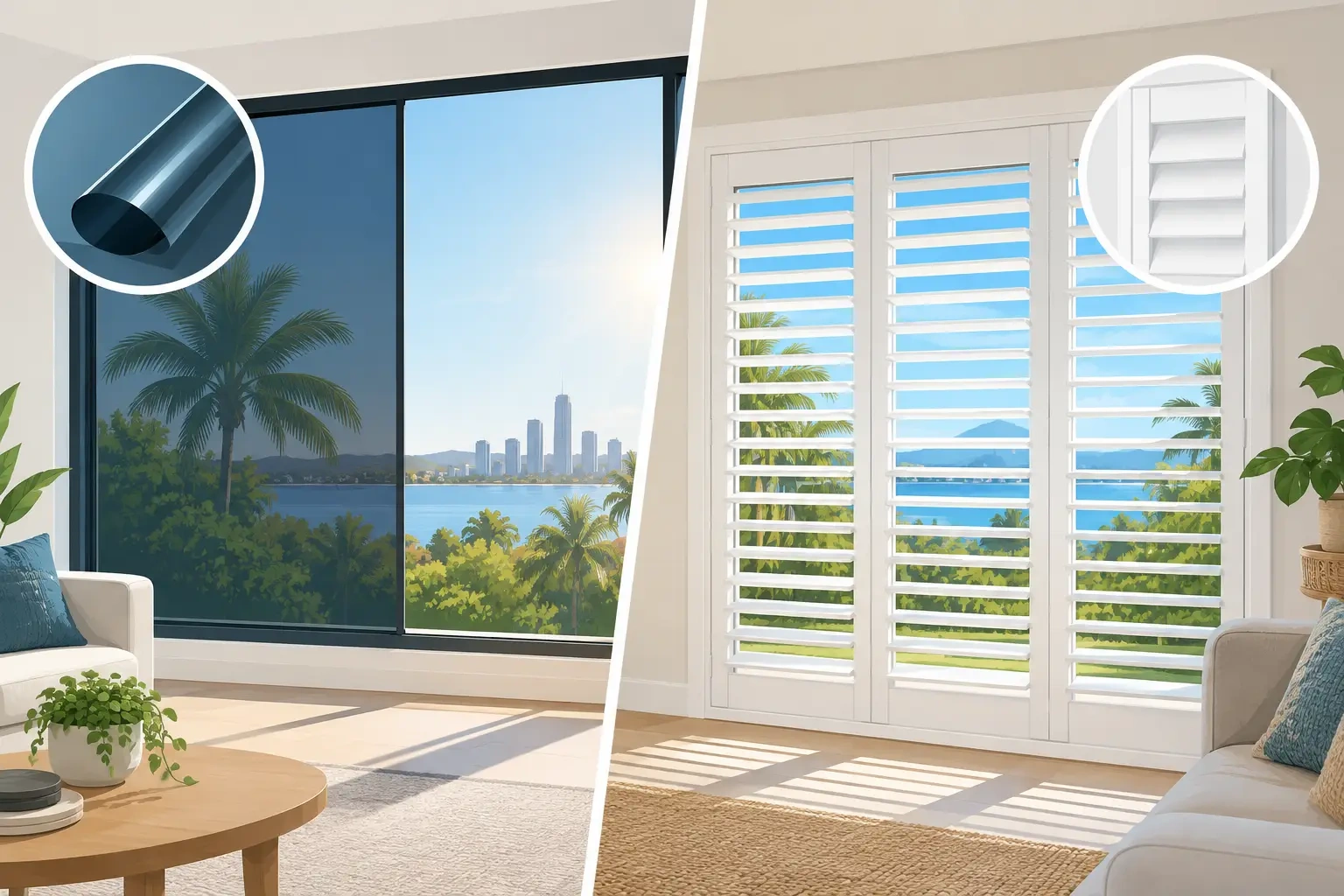
# Window Film Versus Shutters in Queensland Homes A west-facing living room can look great at 9am and feel like an oven by 3pm. That is the point where the window film versus shutters decision becomes practical rather than decorative. Both can improve comfort and privacy, but they work in very different ways - especially on the Gold Coast and in Brisbane, where strong sun, glare and UV exposure are part of daily life. Shutters are a visible window furnishing that gives you control over light and the look of a room. Window film is applied directly to the glass to reduce solar heat, glare and UV while retaining the view and much of the natural light. Neither is automatically the better choice. It depends on what is bothering you now, how you use the space and what you want the window to do. ## Window Film Versus Shutters: The Main Difference The biggest difference is where the solution works. Shutters sit inside the room and manage the light after it has passed through the glass. Window film is fitted to the glazing, where it can reject a portion of solar energy before it enters the room. For a room that is hot, dazzling or fading furniture, this distinction matters. Closing shutters will block direct sunlight and can make a room feel more comfortable, but the glass can still absorb heat and radiate it indoors. A quality solar-control film can reduce solar heat gain while leaving the window uncovered. Depending on the film and glass, heat reduction can be up to 79%, with glare reduction of up to 93%. That does not make film a replacement for every shutter. Shutters offer a strong architectural look, adjustable louvres and a level of room-darkening that many people want in bedrooms. Film is usually the more discreet answer when the goal is to keep the view, maintain daylight and improve the performance of existing glass. ### Heat and cooling costs For Queensland homes, heat is often the deciding factor. Large panes of unshaded glass, particularly on western and northern elevations, can place a real load on air conditioning. Solar film helps by [reducing the amount of heat](https://www.tradetint.com.au/blog/does-window-film-reduce-heat) passing through the glass, so the room is more comfortable even when you want the blinds or curtains open. Shutters can contribute to insulation, particularly when closed, but performance varies with the shutter material, fit and gaps around the frame. They are most effective when you are prepared to close them through the hottest part of the day. If the family wants an open, bright living area without the afternoon sting, film generally provides the more consistent result. For offices and retail spaces, film also has a practical advantage. Staff can sit near windows without constantly changing the light level, and customers can still see a shopfront or display. A closed shutter is rarely a workable daytime answer for a commercial frontage. ### Glare, UV and fading Glare can make a home office difficult to use and turn a television room into a place where everyone shifts seats. Shutters can block glare when closed or angled correctly, although louvre gaps can still allow bright lines of light into the room. Window film reduces glare across the whole pane. This is useful for computer screens, televisions, meeting rooms and reception areas where natural light is welcome but harsh reflections are not. It also filters UV exposure, helping [protect timber floors, furnishings](https://www.tradetint.com.au/blog/uv-film-for-fading-furniture), artwork and stock near the glass. No product stops all fading because visible light and heat also play a part, but quality film is a sensible layer of protection. ### Privacy during the day and night Privacy is where many people need a clear explanation before choosing. Tinted or reflective film can provide excellent daytime privacy when it is brighter outside than inside. You can see out while passers-by have much less visibility in. Frosted privacy film provides privacy day and night, but it is not designed to preserve a clear view. Standard solar film does not create [night-time privacy](https://www.tradetint.com.au/blog/does-privacy-film-work-nights). Once lights are on inside and it is dark outdoors, the effect can reverse. If you need full control at night, shutters have the advantage because they form a physical screen when closed. In overlooked bathrooms, entry sidelights, office partitions and street-level windows, frosted film can be the cleaner option. It delivers permanent privacy without making the room feel closed in, and decorative finishes can suit a more individual look. For bedrooms where adjustable darkness matters, shutters may be a better fit. ## Light, Views and the Look of the Room Shutters become a feature of the room. Plantation-style shutters can suit coastal homes, period renovations and interiors where the window treatment is part of the design. They add depth around the window and allow you to direct light with the louvres. The trade-off is that shutters are always visible. Even opened, their frames and louvres break up the outlook. They can also reduce the clear opening of a window, which is worth considering where you rely on breezes or need to use a window as an exit. Film has a lighter visual footprint. Clear UV films are close to invisible, while neutral, grey or reflective solar films can give glazing a more finished appearance from outside. The right choice comes down to how much change you want to see. If you love the view and dislike bulky window furnishings, film is usually easier to live with. If you want a statement feature and adjustable light control, shutters can earn their place. ## Cost, Installation and Everyday Upkeep Window film is usually less disruptive to install because it uses the existing glass. Once the right film has been selected, it is professionally applied to the internal face of the window in most residential applications. There is no need to fit frames, drill around every window or alter the way the window opens. Shutter pricing varies considerably according to window size, material, shape and installation requirements. They can be a worthwhile long-term furnishing investment, but they are generally a larger visual and financial commitment than film for broad areas of glazing. Cleaning is different too. Film is cleaned much like glass, using suitable non-abrasive products after the curing period. Shutters need regular dusting across every louvre and hinge area. In kitchens, near the coast or in busy commercial settings, that extra cleaning can be noticeable. For landlords and strata properties, film may also be more straightforward where it is approved and professionally specified. External appearance rules, glass warranties and body corporate requirements should be checked first. The same applies to shutters mounted to window frames or surrounding walls. ## When Shutters Are the Better Choice Shutters are often the right answer when a bedroom needs a stronger sense of enclosure, when night-time privacy is non-negotiable, or when the owner wants the window treatment to define the interior style. They are also useful where adjustable airflow through open louvres is a priority. They can be particularly appealing in front rooms that are overlooked from the street, nurseries where changing light levels matter, and homes where the existing glazing does not suffer from significant heat or glare. In those situations, the decorative and practical benefits can outweigh the loss of an uninterrupted view. ## When Window Film Is the Better Choice Film is usually the stronger option for large sun-exposed windows, apartments with expansive glass, offices, shopfronts and rooms where the outlook is worth keeping. It suits homeowners who want cooler rooms without living behind closed coverings, as well as businesses trying to make workstations more comfortable without darkening the premises. It is also highly flexible. A homeowner may use solar film on a hot lounge window, frosted film on a bathroom and safety film on a vulnerable glass door. A commercial property may use decorative film for meeting-room privacy, solar film for heat and glare, and vinyl for branding. The answer does not need to be one product throughout the building. At Trade Tint, I personally assess the glass, the direction it faces and the result you want before recommending a film. Glass type matters, particularly with double glazing, toughened glass and older panes, because the film needs to be suitable for the application. A transparent quote should identify the recommended product rather than simply offering the darkest tint available. ## A Combination Can Be the Smartest Option The choice is not always window film or shutters. In a hot bedroom, solar film can reduce the daytime heat load while shutters provide night privacy and darkness. In a living area, film can manage glare all day while curtains or shutters remain available for evenings and occasions when you want to close the room off. This combination works best when each product has a clear job. Film should handle the ongoing solar performance of the glass. Shutters should handle adjustable privacy, styling and room-darkening. Buying shutters alone to solve a major heat problem can leave you closing them more often than you expected. Before deciding, stand in the room at the time it is least comfortable. Look at where the sun falls, whether you need to see out, when privacy matters and whether the issue is heat, glare, fading or all four. That simple check will usually point you towards the option that makes the window more useful every day.